Posts

Blog 4

Image
 Social status in Morocco is even pervasive within natural resources. Rights to water in rural communities are determined by "elders" or chosen sages within the community (Museum of Water "Mohammed VI," 2022). There are Jemaa's in some rural communities, which are essentially a group of users of a "jointly owned structure" (Museum of Water "Mohammed VI," 2022). The Jemaa designate a person to be in charge of the water distribution making sure is is fair and inline with the rights defined by the former founders (Museum of Water "Mohammed VI," 2022). In some towns, water was originally divided to each user depending on rank and since then, from generation to generation the water shares are divided in halves, quarters, sixths, and twelfths (Museum of Water "Mohammed VI," 2022). This distribution of leadership can cause miasma between those in the western world with no spiritual or religious beliefs surrounding natural resourc...
Do All the Good You Can...

Image
  I was raised in a very loving family who is richly blessed with faithfulness. We are of the Methodist denomination which was founded by John Wesley. We pride ourselves with the slogan, “open hearts, open minds, open doors” ( more here ). All of my life, I have heard and tried to practice the John Wesley quote, “Do all the good you can, By all the means you can, In all the ways you can, In all the places you can, At all the times you can, To all the people you can, As long as ever you can.” In the chance that I do have power, I try to maintain this approach – how can I use my power to do all the good that I can? I love what Essed (2010) wrote in our Leading Across Differences text, “social justice and dignity require, among other things, an understanding of systems of privilege and oppression, which are invariably connected to the notions of power and authority in organizations. Listening to those who feel discriminated against and hearing the message, the ability to be crit...

Blog 4

Image
In my last blog post, I talked about my assumptions of gender roles before I arrived to Morocco compared to the reality of what I'd seen here so far. In this post I am going to talk about the social status of female agricultural workers, and what comes with cultivating the land as a woman.  Women usually get stuck with the hardest, most labor intensive tasks. An example that we didn't get to actually see, but that Dr. Navarro mentioned was about the female argan workers. She explained that women are the ones who produce the oils. Not only is it time consuming, but shelling the nuts is difficult, tedious, and painful. Women have smaller hands than men, so its considered to be more efficient for them to do the work. The method of making argan oil was started by Berber women, and that same method has been around for centuries. Today, the fruit of their own labor has decreased over time. This is because more than 90% of Morocco's argan oil export is in international bulk, which...

Social Status: Language

Image
While being in Morocco I have observed that most of the workers we encounter speak many languages including their native language, French, English and/or Spanish. For example, Marco, the waiter in Rabat, spoke multiple languages, and he was able to speak to most of the guests in the room. He definitely made my meals by talking and asking how I was doing it. He was able to connect with me even though English was most likely not his first language. Furthermore, the guy at the tannery in Fez was showing us where they dyed the animal fur, and he stated that he used to do that until he learned English. He went on to say that if workers do not know English they will stay dying animal fur because they cannot communicate and make sells to a good portion of the tourists that come through. A problem is the ability to find resources to learn another language, so that impacts your stats within a business.   English is in high demand, and people will not be selected by large employers, (Badr, 2...

Blog 4

Image
 For my blog I would like to focus on Ability, more specifically ability that farms have to water. The first two farms we visited, the woman and the entrepreneur, they had a real struggle for water. To me that seemed to be the biggest struggle of farming here in Morocco. In the dryer parts of the county there in an average of 100 mm of rain per year.  https://climateknowledgeportal.worldbank.org/country/morocco/climate-data-historical Then we went to some of the larger scale farms and I saw another perspective. These farms had giant pumps to send water to where it was needed and the had multiple large water basins throughout the farm so that everywhere had easy access to water. Now, i realize that these bigger farms need a lot more water so it still may be a struggle for them although it is clear that it is not near as scare for them. Some of these farms had rivers running through them which give a much higher level of ability for what they can do. A side note, some area are m...

Spiritual Royalty

Image
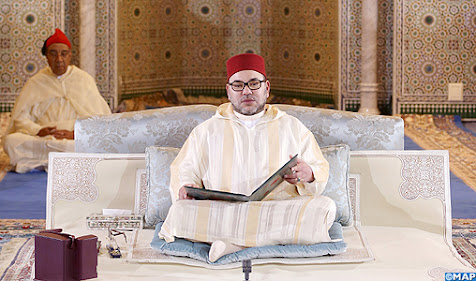
Spiritual Royalty     The government in Morocco is organized in such a way that characterizes it as a constitutional monarchy. The way in which power, both political and religious, is secured is through claims of descent from the Prophet Muhammad. Through these claims of descent, the monarchy solidifies its religious authority which allows it to shift the religious tendencies of the country which simutaneously influences political alliances. In pre-colonial as well as post-colonial Morocco, power and religion have gone hand in hand. Before the colonization of Morocco, sultans had always formed mutually beneficial and constantly changing relationships with Sufist leaders. The adoption of Sufism by the Moroccan monarchy has ebbed and flowed over the years. For a while, Morocco shifted away from Sufism towards Salafist Islam. However, after 9/11 and the correlation between Salafist Islam and terrorism, Morocco began to shift its attention away from this religious view, refocusing...

Blog 4: Homeless in Morocco

Image
     As we have been driving through various towns, I have noticed a lot of people sitting on the sidewalks in the middle of the day. I found this odd because I figured most people would be at work at that time. This made me believe that those individuals may be unemployed or homeless.       We asked Hamid a few days ago what the homeless population is like in Morocco, and he said that is was a lot less than the States because people here are so community based that they welcome in relatives or friends who are struggling with open arms. While this may be true, there are still approximately 700,000 homeless in Morocco, with about 30,000 of that being children (Padmaraj). According to The Bergen Project, this homeless population was increased by the Structual Adjustment Policy, which had underfunding and a misallocated budget, causing many people to lose their homes (Padmaraj). The government has addressed this issue and is beginning to create more shelt...